Like us on:
OVER 60 YEARS IN BUSINESS
EXPERIENCED CESSPOOL,
SEWER, AND DRAIN SERVICES
SEWER, AND DRAIN SERVICES
CALL US:
Click to View Special Offers
Cesspools
Cesspool Cleaning Around Smithtown, NY
Family Owned Cesspool Pumping, Sewer, and Drain Services
Since 1954 our family owned and operated business has taken pride by providing both residents and businesses of North Shore Long Island with Superior Cesspool, Sewer and Drain Services. We offer a full-service Cesspool Pumping and cleaning. We rely on the finest equipment and service technicians to get the job done right. Radio dispatched trucks allow fast and reliable service 24-hrs. a day, 7-days a week. We look forward to meeting all of your expectations.
Our Services
- Cesspool
Pumping
- Cesspools Electronically
Located
- Cesspool Cleaning
- Septic Line Cleaning
- Chemical Treatments
- Hydro Jetting
- Aerations
- High Pressure Line Cleaning
- Video Camera Inspections
- Storm Drains Cleaned
- Plumbing, Drain & Sewer Cleaning, Tubs, Sinks & Toilets Cleaned
Jarrach Cesspools
Click to use coupon
EXPIRED
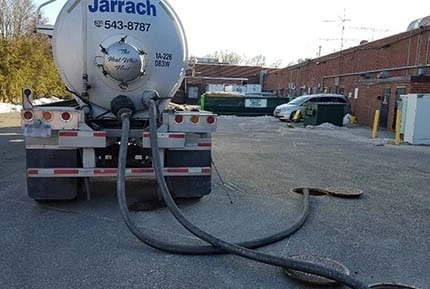
Cesspool System Basics
Here is the how the cesspool system works:
- Waste flows from the home into the cesspool.
- Organic solids float to the top and inorganic solids sink to the bottom of the tank.
- Natural occurring bacteria in the cesspool converts the organic solids to liquid.
- The clear liquid flows out the sides of the tank and into the surrounding soil.
Signs a Cesspool or Drain Line Needs Service
- Overflowing Toilet
- Slow Drainage
- Sink or Tub Line Gurgling
- Odor Inside or Outside the Home
- Wet Lawn Surface atop Cesspool
How does a cesspool system fail? SOLID BUILD-UP!
By not servicing and maintaining your system properly, solids build up within the tank and clog the pores of the cesspool walls. This will prevent liquid from escaping the tank into the surrounding soil. In addition, the presence of inorganic household substances in the tank, like toilet cleaners, bleach, and anti-bacterial soaps will also turn into solids, clog the cesspool walls, and cause a system overflow.
SOLUTIONS:
Septic Tank Pumping: Of solid buildup every 3 years (as recommended by the Suffolk County Department of Health) so no solid matter goes into the overflow cesspool causing cesspool failure. A cesspool is the draining component of the system, this should be checked every 3 years as well. If the cesspool fails there are only 3 remedies for this.
Chemical Treatments open up bottoms of cesspools and enhance drainage and system performance.
Hydro-Jetting, along with chemical (sulfuric acid). This service is the best service available, the process is done by using water to restore drainage. Water is pumped through a plastic pipe into the sand at the bottom of the cesspool to (FLIP THE SLIME) out of the sand so the chemical (sulfuric acid) can dissolve it quickly and most efficiently. DURING THIS PROCESS the water-level in the cesspool will start to drop instantly, allowing for usage to resume like normal.
Aerating, along with a chemical (sulfuric acid) to open the drainage in the cesspool to allow the water to seep into the earth naturally.
The Two Types of Sewage Disposal Systems in Use Today:
SEPTIC TANKS: should have at least 250 gallons of capacity for each person in the house. Standard sizes are 750, 1000, 1200, and 1500 gallons. They can be constructed of precast concrete, plastic or fiberglass. Older tanks may be made of steel, which often corrode over time, or they may be built in place of block construction. Larger tanks are often divided into two chambers to improve solids separation. Manholes and inspection ports are located in the cover for service and inspections.
CESSPOOLS: A cesspool incorporates both functions of a septic system in one structure. It consists of a large perforated tank in which digestion takes place, surrounded by an absorption bed where suspended and dissolved solids undergo final digestion and water is filtered. Cesspools are not as efficient as other systems, more prone to failure, and difficult to restore to operation.
CESSPOOLS: A cesspool incorporates both functions of a septic system in one structure. It consists of a large perforated tank in which digestion takes place, surrounded by an absorption bed where suspended and dissolved solids undergo final digestion and water is filtered. Cesspools are not as efficient as other systems, more prone to failure, and difficult to restore to operation.
Contact us
for all of your cesspool & drain line cleaning, repair or Installation needs to ensure your system is functioning properly.
Browse Our Website:
Visit Us Today:
Contact Information:
Jarrach Cesspool Service, Inc.
Email: [email protected]
Phone:
Mobile:
Fax:
Address:
Hours of Operation:
Email: [email protected]
Phone:
Mobile:
Fax:
Address:
Hours of Operation:
| Mon-Sun - 24hr |
Like us on:
Images provided on this website are for personal, non-commercial use. Republication, retransmission, or reproduction of such images is strictly prohibited.